Facial Recognition Terminals: The Ultimate Guide
Facial recognition technology is rapidly gaining traction in the business world, because cutting-edge technology, which identifies and verifies individuals based on unique facial features, making it incredibly secure and suitable for the healthcare and finance industry.
If you want to learn more information or the pricing of clocking-in-systems, you can do so here.
Useful links from our article
What is Facial Recognition Technology?
Facial Recognition Terminals Providers
How Does Facial Recognition Technology Work?
Benefits of Facial Recognition Technology
Common Uses of Facial Recognition Technology
Facial Recognition and Data Privacy
What is Facial Recognition Technology?
Facial recognition technology is a type of biometric system that uses advanced algorithms to identify and authenticate a person by analysing their facial features. How it works is that the system captures an image of the face, maps its unique features, and compares it to a pre-existing database of facial images to verify the individual’s identity (we’ll go into more detail below!)
Facial Recognition Terminals Providers
How Does Facial Recognition Technology Work?
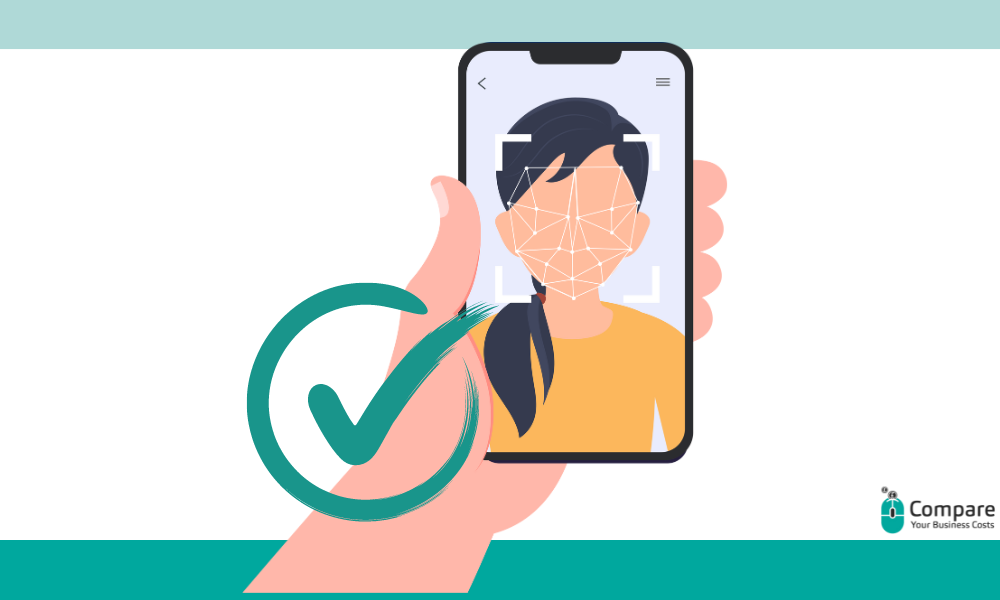
Facial recognition technology operates through several key steps which we’ll go through:
- The system captures an image of the person’s face using a camera. This can be done in real-time (such as when entering a building), sometimes you can also do this by scanning an existing photo.
- The technology analyses key facial features (such as the distance between the eyes, the shape of the nose, and the structure of the jawline, and creates a mathematical map of the face).
- The facial map is then compared to a database of stored facial data to see if there is a match.
- Once the identity is confirmed, the system grants or denies access, depending on the pre-set permissions
Benefits of Facial Recognition Technology
Facial recognition technology offers numerous advantages for businesses, particularly in terms of security, efficiency, and user convenience – here are some of our favourite benefits:
- Unbeatable security
Security is one of the primary reasons businesses invest in facial recognition technology., because unlike passwords, PINs, or access cards, a person’s facial data is nearly impossible to duplicate, making it a highly secure form of identification.
- Contactless and hygienic
In the post-pandemic era, the need for contactless solutions has grown exponentially and facial recognition technology is a touch-free system that allows your staff to authenticate their identity without needing to touch any surfaces.
- Time and attendance tracking
acial recognition technology simplifies time and attendance tracking by allowing employees to clock in and out using their face which means you don’t need physical punch cards, swipe cards, timesheets etc.
- Faster authentication
Facial recognition technology provides instant authentication, reducing the time spent on manual checks or ID verification, so in high-traffic areas, such as office entrances or retail environments, this can significantly improve the flow of people.
- You can greatly reduce fraud
In industries like finance or online payments, fraud is a growing concern – but facial recognition technology helps reduce fraud by ensuring that only the authorised person can carry out sensitive transactions or access accounts.
- Scalable and customisable
Facial recognition technology is scalable, making it suitable for businesses of all sizes. Additionally, you can customise access permissions, allowing different levels of access if you need to do so.
Common Uses of Facial Recognition Technology
It might seem obvious, but there are lots of different ways you can utilise facial recognition technology within your business. Some of our top tips are:
- Access control
One of the most widespread applications of facial recognition technology is access control in offices, warehouses, and other business premises, which is especially useful for businesses with sensitive data, valuable assets, or restricted zones.
- Time/attendance management
Many UK businesses are using facial recognition to manage employee time and attendance because this technology ensures that employees clock in and out accurately.
- Retail and customer personalisation
In retail, facial recognition is being used to enhance the customer experience by identifying loyal customers, and also prevent fraud at self-serve checkouts.
- Banking and financial services
Facial recognition is also increasingly being used in the banking sector to verify customer identities when accessing accounts, authorising transactions, or applying for loans.
- Healthcare sector
In healthcare, facial recognition technology is used to verify the identity of medical professionals, making sure that patients have the utmost privacy and confidentiality with regards to access to records etc.
Facial Recognition and Data Privacy: What UK Businesses Need to Know
As with any biometric system, facial recognition technology comes with data privacy considerations, and in the UK, businesses must comply with the General Data Protection Regulation (GDPR) when collecting, storing, and using biometric data like facial images.
Also keep in mind that if you plan on using facial recognition technology, you must ensure they obtain explicit consent from individuals, provide transparency about how their data will be used, and implement robust security measures to protect stored data to avoid getting yourself into any hot water (and huge fines!)
Other Useful Links About Clocking-in-systems
Hi, I’m Ally Cox, a senior copywriter and blogger at CompareYourBusinessCosts.co.uk, the UK’s trusted platform for comparing business services.
With over a decade of experience in the B2B sector, I specialise in simplifying complex topics like leased lines, VoIP, business energy, HR and payroll solutions, accounting software, and EPOS systems.
Before joining CompareYourBusinessCosts, I worked across various industries, gaining hands-on experience in HR, copywriting, and business operations- from clocking-in systems to card machines and office technology.
My goal is simple: to help UK businesses make informed, confident decisions when choosing products and services that improve efficiency and save money.